← Back to BlogPart of: How AI Is Transforming the Immigration Process

AI-Powered Immigration, Explained: What Technology Can Do for Your U.S. Visa or Green Card

Jumpstart Team·April 6, 2026
Ai powered immigration explained what technology can and can 1773887835853

AI-Powered Immigration, Explained: What Technology Can Do for Your U.S. Visa or Green Card

U.S. immigration is not just paperwork. For founders, executives, and distinguished professionals, it is a high-stakes operational project with real business consequences: where you can work, how you can structure your role, whether your company can expand, and how fast you can move.

In the past, most applicants had two imperfect options. Either you hired a traditional firm and accepted a process that often feels opaque and slow, or you tried to piece everything together yourself and hoped you did not miss something material.

A third model is now emerging: immigration built like a modern workflow, using AI to reduce friction while keeping critical decisions under qualified human supervision. Jumpstart sits squarely in that model, serving founders, executives, and distinguished professionals with AI-powered immigration services for U.S. work visas and green cards.

This article breaks down what AI is genuinely good at in immigration, where human expertise remains non-negotiable, and how to evaluate whether an AI-enabled process is actually safer and clearer than the old way.

The real bottleneck in “extraordinary” and founder cases: coordination, not ambition

Most high-achieving applicants are not short on credentials. The bottleneck is usually one of three things:

  1. Evidence sprawl
    Your proof lives everywhere: email, old decks, press links, Google Drive folders, conference pages, patents, investor updates, LinkedIn, payroll systems, contracts.
  2. Narrative mismatch
    Immigration adjudication rewards coherence. If your resume says one thing, your letters imply another, and your exhibits support a third, you create avoidable risk.
  3. Time compression
    Operators need to move quickly. A visa strategy that takes months to assemble can become irrelevant to the business by the time it is filed.

AI does not “win” cases by itself. But it can materially improve the process that creates a strong case.

Where AI helps most in immigration (when used responsibly)

1) Turning messy inputs into a petition-ready structure

AI is well suited to organizing information, categorizing documents, and standardizing formats. Jumpstart’s terms explicitly describe AI-assisted workflows for preliminary eligibility analysis, document organization, and structuring information, with human supervision built in.

What this means for you: fewer lost documents, fewer last-minute scrambles, and a clearer path from raw materials to exhibits.

2) Finding gaps before USCIS finds them

Strong cases are rarely “one big achievement.” They are a collection of credible signals that, together, support the legal theory of the petition.

AI can help identify what is present, what is missing, and where you might need stronger corroboration, for example, third-party coverage vs. self-published content, or independent references vs. internal praise.

3) Consistency checks across the full record

Humans are not built to compare dozens of documents line-by-line under deadline pressure. AI can. That is especially valuable for catching preventable issues like title inconsistencies, timeline conflicts, role descriptions that drift, or mismatched company names across international entities.

4) Draft acceleration, not “auto-approval”

AI can help accelerate first drafts of supporting materials and summaries, but it should never be treated as a substitute for legal judgment, strategy, or fact-checking.

The best implementations treat AI as a high-speed writing and analysis assistant that still requires expert review.

Where AI should not be in charge

If you take one point from this article, make it this: any provider that implies AI can replace the judgment layer is creating risk, not removing it.

Jumpstart explicitly states that no critical decisions are made exclusively by automated systems without human supervision, and that final decisions rest with government authorities.

Here are the areas that must remain human-led:

  • Visa selection strategy and sequencing (what you file, when, and why)
  • Legal theory (how your facts map to the requirements)
  • Risk calls (tradeoffs between speed, cost, and strength)
  • Final quality control (every factual claim needs support)

A practical checklist: how to become “AI-ready” for a visa or green card process

Whether you work with Jumpstart or any other partner, you will move faster if you prepare a clean input set. Here is a simple checklist that works across common founder and high-achiever pathways:

Core identity and background

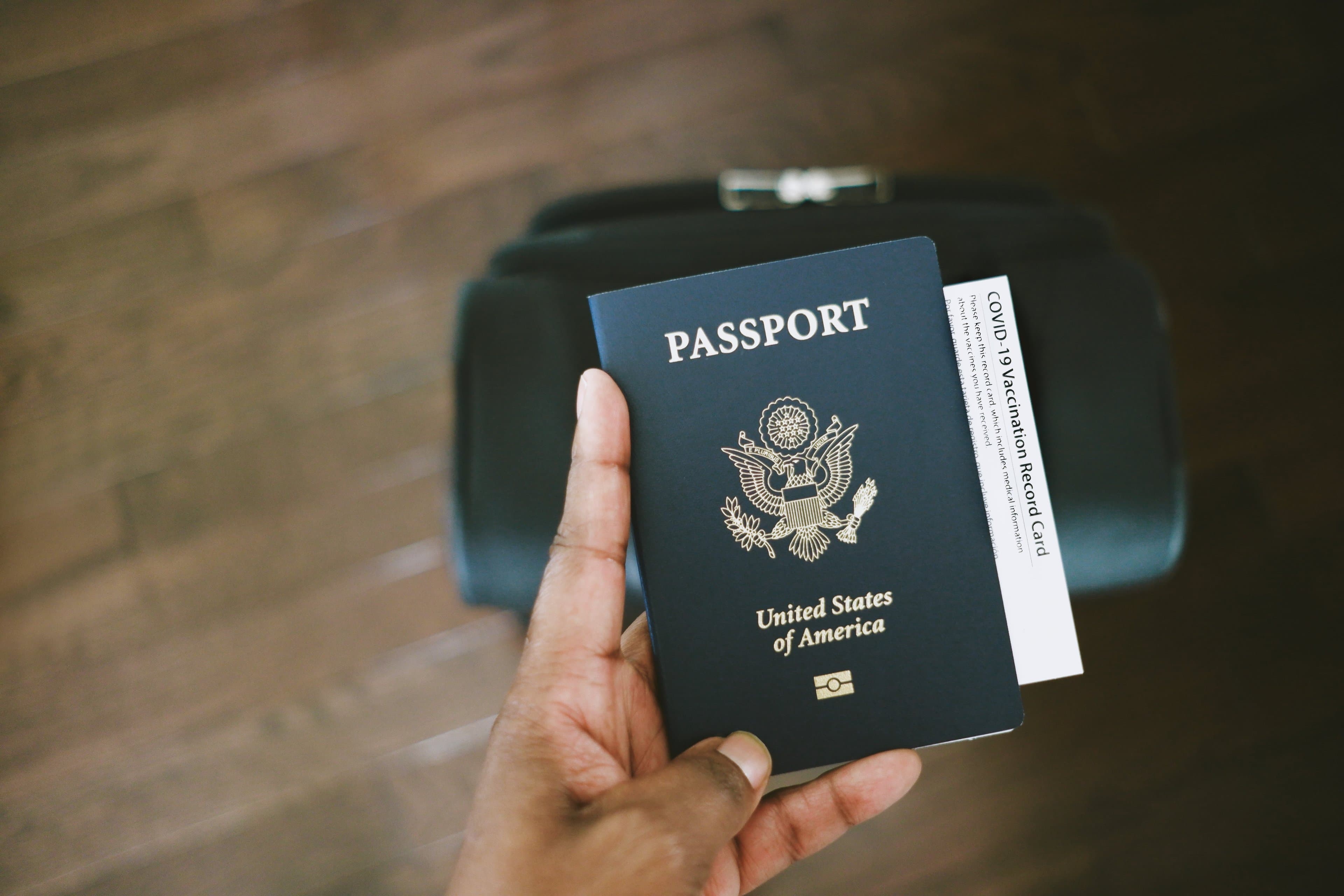
  • Passport biographic page
  • Current immigration status documents (if applicable)
  • Current resume and LinkedIn profile URL

Proof of impact (choose what fits your profile)

  • Press coverage and speaking engagements
  • Awards, selective programs, accelerators, or grants
  • Publications, patents, or technical artifacts
  • Evidence of leadership: org charts, role descriptions, major initiatives
  • Commercial traction: revenue milestones, partnerships, investor materials (as appropriate)

References and third-party validation

  • A list of potential recommenders (with titles and relationship to you)
  • A short “what to highlight” brief for each recommender

Company documentation (for founder and executive scenarios)

  • Entity documents and cap table summaries (where relevant)
  • Evidence of operations: customers, contracts, hiring plans, financials

When AI is applied to a well-organized dataset, it becomes dramatically more useful. When it is applied to a chaotic set of links and screenshots, you get chaos faster.

What Jumpstart offers, in plain English

Jumpstart positions itself as an AI-powered immigration platform for U.S. work visas and green cards, built for founders, executives, and distinguished professionals.

Supported pathways

Jumpstart highlights:

  • O-1 (extraordinary ability)
  • L-1 (intracompany transferees)
  • E-2 (treaty investor)
  • EB-1A and EB-2 NIW (green card categories)

Pricing and a risk-reduction model

Jumpstart publishes package pricing and timelines on its pricing page, including:

  • Visa packages (O-1, E-2, L-1): $8,000, with an average timeline noted as 4 weeks
  • Green card packages (EB-1A, EB-2 NIW): $12,000, with an average timeline noted as 2 to 3 months
  • A 100% money-back guarantee of Jumpstart’s fees if the application is not approved
  • “Jumpstart Insurance” that covers the government filing fee for a reapplication up to $600

Two important clarifications can both be true at once:

  • No one can guarantee a government outcome.
  • A company can guarantee its own fee policy.

Jumpstart’s terms make the first point explicit, and its pricing page makes the second point explicit.

The takeaway: the future is not “AI vs. lawyers.” It is process versus chaos.

For high-achieving professionals, the best immigration outcomes typically come from two things:

  1. A coherent story backed by credible evidence.
  2. A process strong enough to keep that story consistent from intake to filing.

AI can be a real advantage when it is used to organize, validate, and accelerate the work, while humans remain accountable for strategy, judgment, and final quality.

If you are exploring an O-1, L-1, E-2, EB-1A, or EB-2 NIW path, Jumpstart’s model is designed for exactly that intersection: immigration expertise plus AI-powered workflow, with clear published pricing and a fee-backed guarantee structure.

Note: This article is for informational purposes only and does not constitute legal advice.